If you’ve been told you might need a dental implant - or you’re simply curious - you’re not alone. Dental implants are among the most talked-about tooth replacement options today, and patients naturally have many questions. Below are the top 10 questions we hear most often, answered clearly and honestly, so you can feel informed and confident.
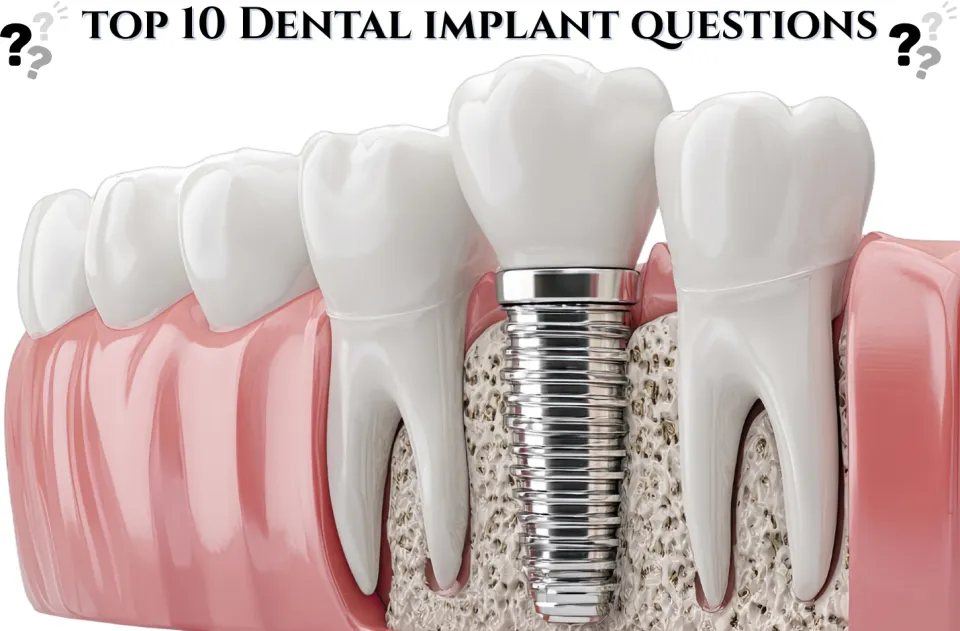
1. What exactly is a dental implant?
A dental implant is a small titanium post that replaces your tooth’s root. It’s placed in the jawbone and topped with a crown. Once healed, it functions like a real tooth—strong, stable, and comfortable.
2. Are dental implants painful?
This is a common concern. Most patients find the procedure manageable. The implant is placed under local anesthesia, and many experience less discomfort than expected, often less than a tooth extraction.
3. How long do dental implants last?
With good oral hygiene and regular dental visits, implants can last decades or even a lifetime. The crown may need to be replaced due to wear, but the implant is highly durable.
4. Am I too old for dental implants?
Age isn’t the key factor. Many in their 60s, 70s, and 80s get implants. What matters is overall health and enough bone for support.
5. How long does the implant process take?
The full process can take several months, mainly because the jawbone needs time to heal and bond with the implant. While that sounds long, most of that time is spent healing rather than on active treatment.
6. Do dental implants look natural?
Yes. Modern implants are designed to blend seamlessly with your natural teeth. The crown is custom-made to match your smile, so most people won’t be able to tell which tooth it's on.

7. Can implants help with eating and speaking?
Yes. Implants anchor in the jawbone and don’t slip like dentures. Patients report feeling more confident eating, speaking, and laughing.
8. What if I don’t have enough bone?
Bone loss doesn’t rule out implants. Often, techniques such as bone grafting can provide sufficient support for implants.
9. Are dental implants expensive?
Implants can cost more upfront than other options, but they often save money in the long term by lasting longer and requiring fewer replacements. Many offices also offer financing options to help make treatment more manageable.
10. How do I care for a dental implant?
Care for implants like natural teeth: brush, floss, and get regular checkups. Good habits keep your implant healthy.
The Bottom Line
Dental implants are a reliable, long-lasting solution for missing teeth, uniquely integrating with your natural bone for stability. For many patients, restoration is not just about function but about confidence. If you’re considering implants, the best next step is a personalized consultation to see what’s right for you.
Dentist in Tampa, FL, Tomlinson Dental
3911 North Boulevard, Tampa, FL 33603
Emergency Dentist, Dental Implants, Implant-Supported Dentures